
By Claire Navarro
After decades of fighting, civil society groups in Latin America are beginning to pull the truth surrounding enforced disappearances from the tightly clasped hands of their reluctant governments. On November 4th, the Inter-American Commission on Human Rights (IACHR) held two hearings regarding the efforts of Latin American NGOs to establish a culture of openness within their governments.
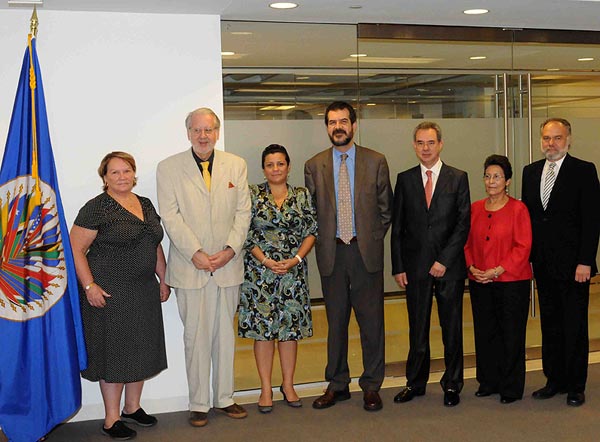
During the first hearing, “Access to Public Information in Latin America,” petitioners Ramiro Álvarez Ugarte, Edison Lanza and Moises Sanchez of the Latin American NGO, Regional Alliance for Free Expression and Information (Allanza Regional por la Libre Expresion e Informacion), presented their request for IACHR-endorsed transparency standards throughout Latin America to pressure Latin American governments into cooperating with ongoing and future investigations of human rights abuses by releasing requested documents.
The petitioners made several points about Latin American nations, particularly Nicaragua, Paraguay, Panama, El Salvador, Argentina, Honduras, Chile, Venezuela, and the Dominican Republic:
- Lingering remnants of the 1960s-1990s “culture of secrecy” have impeded the progress of government openness;
- Latin American governments exploit the vagueness of present regulation as a loophole to evade the release of information; and
- Latin American states obstruct free access to information by ceasing production of government-sensitive material anticipated to be of interest to the public; and by claiming that requested documentation poses a threat to National Security or does not exist or was destroyed.
Though the specifics of the petitioners’ call to action were somewhat vague, their emphasis on the need for legal support of the people’s right to freely access information as well as the need for public criticism of state-imposed impediments were important points. (more…)


