
It has been 25 years since President Ronald Reagan stepped up to the microphone in the White House press room and made the announcement that launched one of the greatest scandals in modern American politics.
Reagan announced that his administration had sent “small amounts of defense weapons and spare parts to Iran” not to trade arms for hostages, but to improve relations and support moderate mullahs. There was “one aspect” of the operation that, the President said, he had been “unaware of.” His attorney general, Edwin Meese, then stepped forward to describe how “private benefactors” had transferred profits from those sales to counterrevolutionary forces, the contras, fighting to overthrow the Sandinista government in Nicaragua. No U.S. officials were involved, according to Meese, in this “diversion” of funds that linked two seemingly separate covert operations.
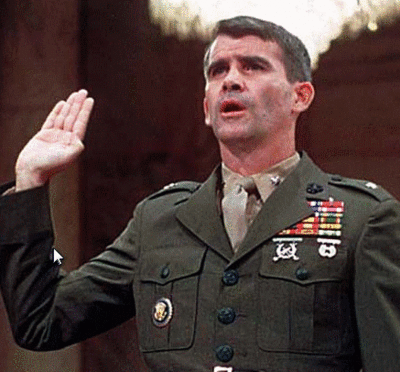
The focus on the diversion, as Oliver North, the NSC staffer who supervised the two operations wrote in his memoir, Under Fire, was itself a diversion. “This particular detail was so dramatic, so sexy, that it might actually—well divert public attention from other, even more important aspects of the story,” North noted, “such as what the President and his top advisors had known about and approved.”
The list of the “other… more important ” aspects of the sordid story that became known as “Iran-contra” scandal is a long one but worth recalling 25 years later. The Reagan administration had been negotiating with terrorists (despite Reagan’s repeated public position that he would “never” do so). There were illegal arms transfers to Iran, flagrant lying to Congress, soliciting third country funding to circumvent the Congressional ban on financing the contra war in Nicaragua, White House bribes to various generals in Honduras, illegal propaganda and psychological operations directed by the CIA against the U.S. press and public, collaboration with drug kingpins such as Panamanian strongman Manuel Noriega, and violating the checks and balances of the constitution.
“If ever the constitutional democracy of the United States is overthrow,” the leading political analyst of the scandal, Theodore Draper wrote at the time, “we now have a better idea of how this is likely to be done.”


