
As we approach the twentieth anniversary of the Rwandan genocide, the National Security Archive is utilizing formerly classified documents released by the Defense Intelligence Agency (DIA) to help bring accountability for and inform the public of the atrocity. The only problem is, the DIA released these documents nearly a decade ago –and is now redacting the information they once released.
Back in 2004, the Archive submitted a FOIA request about the Rwandan genocide, and the DIA released 14 responsive documents. In 2013, the Archive submitted a Mandatory Declassification Review (MDR) request for the re-review and release of information withheld in the 2004 case (a common technique to compel agencies to disclose more information). Usually agencies release more information, as the passage of time has made its protection no longer necessary, but in this case, the DIA attempted to retroactively classify information. Of the 16 documents, 6 are nearly fully redacted, even though they were released with only limited redactions in 2004.

In addition to the DIA’s retroactive classification, the information contained in the documents already exists in the public domain thanks to many other important declassifications on the Rwandan Genocide, including documents that were used by the International Criminal Tribunal on Rwanda. As we approach the 20th anniversary of the Rwandan genocide, the trend of increased declassification on the tragedy should not be reversed.
Take a look at the document below for one egregious example. The document refers to Uganda’s support of the Tutsi majority Rwandan Patriotic Front (RPF), a fact found in scholarly books, other declassified documents, and in news reports. The document reports that, “attacks in the northeastern sector near the [(b)(1),1.4(b)] border reflect a recent change in the tactics of the RPF, which previously had mostly attacked military targets.” Even by looking at a map, a person unfamiliar with the conflict could discern that Uganda is on the northeastern border of Rwanda, yet this is information, according to the DIA reviewers, is a threat to national security as “foreign government information”.
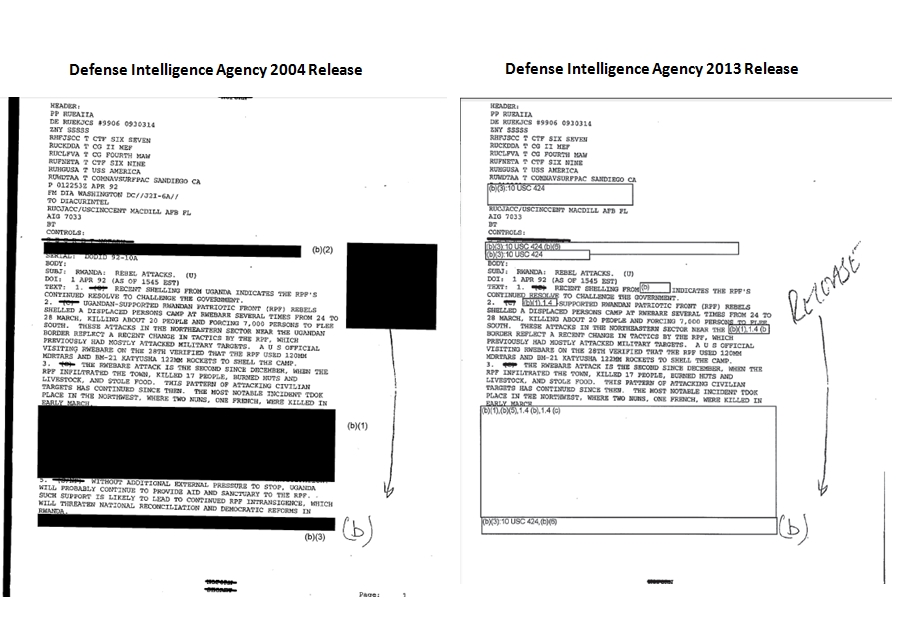
Here is a table comparing the 2004 and 2013 releases, with examples of “newly” redacted information: Table of 2004 vs 2013 Releases. The Archive recently filed an administrative appeal in this case.

These kinds of declassification reversals beg the question of whether the DIA took President Obama’s January 21, 2009 FOIA Memorandum directing all agencies to “adopt a presumption in favor of disclosure” and apply this presumption “to all decisions involving FOIA” seriously. The DIA’s latest disclosure makes me think not.


