
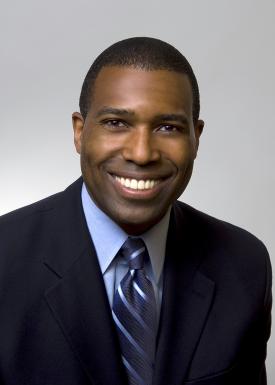
Today, the National Security Archive had its first meeting with the Department of Justice’s Chief FOIA Officer and Associate Attorney General, Tony West. At the meeting, West said he looked forward to working with the Archive and other open government groups on the US Open Government Partnership’s National Action Plan.
The Archive also said it was looking forward to working with West and the rest of the DOJ Office of Information Policy, but warned of an extreme DOJ “FOIA credibility gap” and of a “poor FOIA track record” at the Department.
The Archive presented West with a memo describing four action items the Department of Justice could do to immediately establish its FOIA bona fides.

———————1
April 8, 2014
TO: Tony West, Chief FOIA Officer/Associate Attorney General, US Department of Justice
FR: Tom Blanton/Nate Jones, National Security Archive
Thank you for meeting with Freedom of Information advocates about the Department of Justice’s role in encouraging and overseeing agency implementation of the Freedom of Information Act. Unfortunately, five years after the Attorney General instructed agencies to instill a “presumption of openness” into their FOIA processes, DOJ’s track record leaves much to be desired. We strongly recommend that you implement the following action items:
- Conduct a full FOIA litigation review. The Department of Justice’s “defend everything” litigation stance undermines its commitment to the Freedom of Information Act. The 1993 FOIA litigation review “of the merits of all pending and prospective FOIA litigation cases in accordance with the Department’s new FOIA policy standards” conducted by Attorney General Janet Reno led to the “complete resolution” of more than a dozen FOIA lawsuits. To date, there has been no evidence that the Department of Justice has conducted a similar review since the beginning of the Obama administration. Additionally, despite a pledge from Director of Information Policy Melanie Pustay to provide a list of all FOIA cases that the DOJ has refused to defend to the Senate Judiciary Committee, no such list has been presented to the public.
- Embrace the best practice recommendations for FOIA regulations that have been developed by the Office of Government Information Service and the requester community. The National Action Plan for the Open Government Partnership commits the Obama administration to implement new government-wide FOIA regulations, and apparently DOJ has the lead role in coordinating that process. However, the Department has a serious credibility gap on this issue, since DOJ’s previous efforts at new FOIA regulations met across-the-board criticism and rejection from both Congress and civil society. A good first step would include publishing the draft Department FOIA regulations that apparently are waiting for approval at the Office of Management and Budget, so that we and others can review them. A good second step would be to include the OGIS and requester recommendations in a new draft.
- Support a legislative fix to the b(5) “deliberative process” FOIA exemption, the evocation of which is now at an all-time high, up 44 percent between FY 2011 and 2013 government wide. Agencies have flouted the Attorney General’s March 2009 call for b(5) restraint and discretionary release. Agencies need to know that, contrary to DOJ’s recent Congressional testimony, “attorney work product” and “attorney client information” are subject to discretionary release.
- Produce an updated report on the State Secrets reforms announced by Attorney General Holder in September 2009 but unreported upon since the DOJ’s April 2011 letter to Congress.
Implementing these action items will demonstrate that the Attorney General’s Sunshine Week 2009 pledges were not merely empty words, and that he, the Office of Information Policy, and the Department of Justice are indeed working toward President Obama’s Freedom of Information Act and transparency instructions.
1. [508 compliant]↩

 UNREDACTED: The National Security Archive Blog
One response to “How the Department of Justice Can Narrow its FOIA Credibility Gap”
[…] sure to read the memo the National Security Archive gave to Associate Attorney General Tony West on the steps the DOJ […]