
As the Arab Awakening continues to rock the Middle East and North Africa, Tunisia’s civil society has launched a national dialogue about one of the thorniest issues facing the country: how to bring former President Zine el-Abidine Ben Ali’s brutal security system under civilian control?
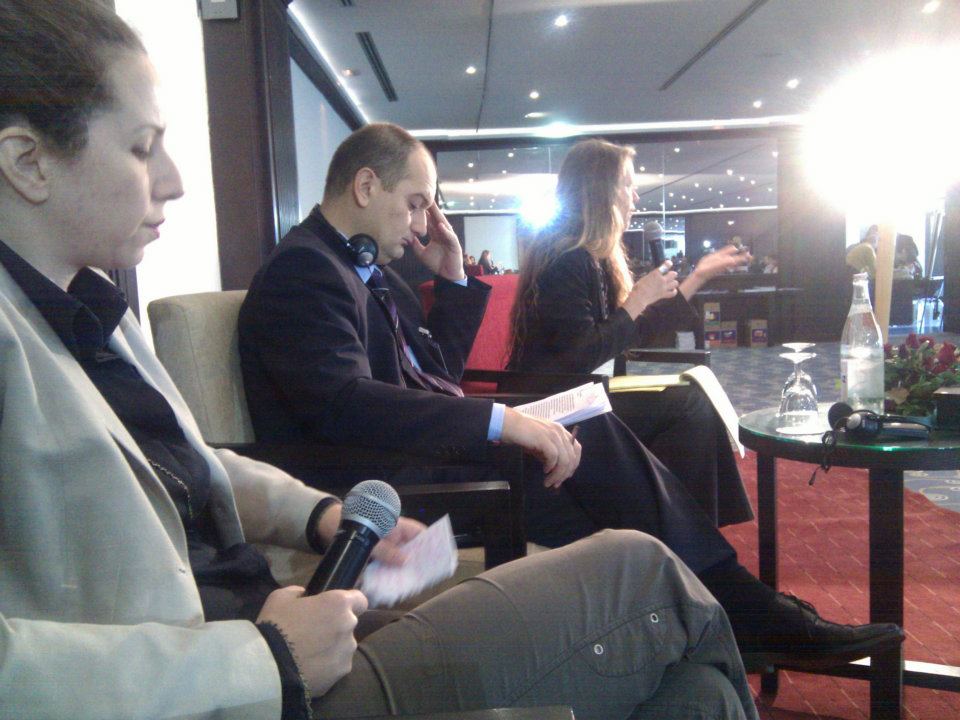
From November 12-13, the Tunisian NGO Le Labo’ Democratique teamed up with Geneva-based Centre for Democratic Control of Armed Forces (DCAF) to convene a public meeting on “The Archives of the Political Police: A Challenge for Transitional Democracy?” The conference brought security experts, archivists, intellectuals, journalists, bloggers, artists and activists together with members of Tunisia’s interim government to discuss strategies for obtaining and preserving the records of the old regime’s hated security apparatus. For comparative purposes, the organizers invited four international specialists with experience in archives: from Poland, Germany, Romania, and the National Security Archive. (See conference agenda, here.)
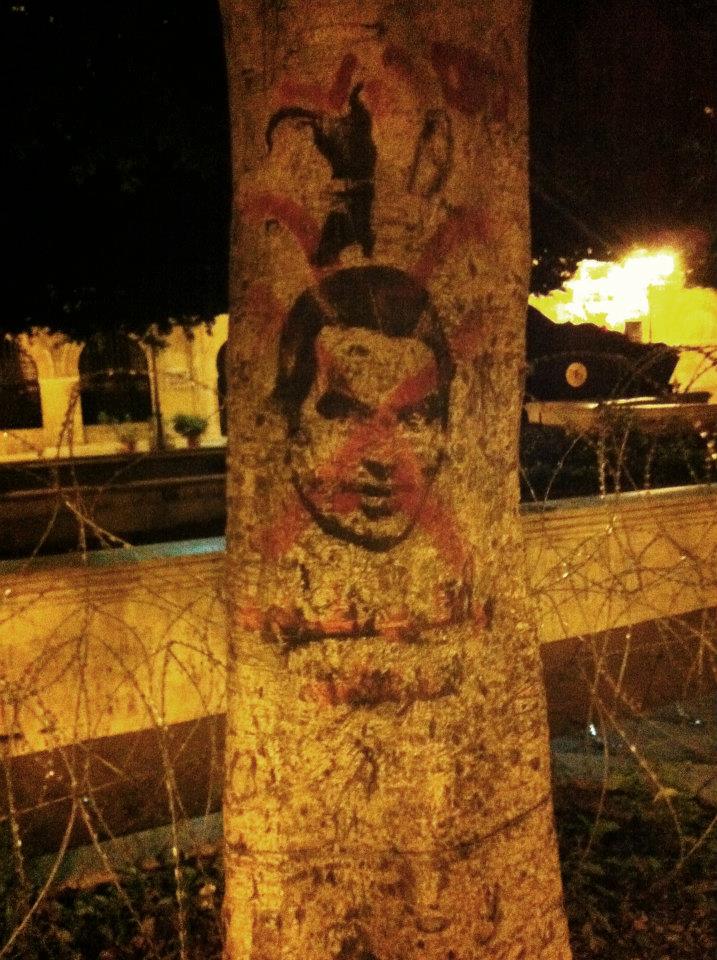
Tunisia’s revolution began on December 17, 2010, when a young street vendor in the town of Sidi Bouzid, Mohamed Bouazizi, set himself on fire in protest of repeated harassment by local officials. His act inspired angry demonstrations by citizens fed up with an abusive and corrupt regime; after he died from his burns on January 4, the riots became a general uprising, and on January 14 Ben Ali stepped down after 23 years in power.
Now Tunisia struggles to build a democratic nation out of the ruins of authoritarian rule. Although the country has navigated the dangers of political transition with an extraordinary calm and national cohesiveness, the old governing structures and many of the former officials remain in place. The November conference was designed to address one of the regime’s most despised legacies: the secret police.
Operating out of the Interior Ministry and other federal agencies, the intelligence and security forces known collectively as the secret police, or political police, excelled in spying on citizens, infiltrating civil society groups, trolling emails and social media sites for information, and harassing, intimidating and torturing suspected opponents of Ben Ali’s regime. Conference participants agreed that no space, public or private, was safe from the surveillance state. As Farah Hachad, a lawyer and president of Le Labo’, recalled at the start of the conference, “Since I was born, even conversations inside our house would be silenced because of the fear inside our hearts that we would be heard and punished.”

Presenters at the conference and audience members had their own memories of the repressive power wielded by the political police. One man recounted how an agent showed up at his door to detain him, “And when I asked, do you have an arrest warrant?, he pulled twenty blank arrest warrants from his pocket, all signed by the Interior Minister, and said, I can have as many as I want.” Taieb Baccouche, the interim Minister of Education and president of the Arab Institute of Human Rights, remembered signing his name to a petition for democracy in the late 1960s along with dozens of other activists, artists and scholars. “That was the beginning of surveillance: they controlled my phone, my mail and all my movements from then on.” Everyone agreed that the political police still existed and still posed a danger to democratic change, despite the advances of the revolution.
More than the issue of disbanding the secret police, however, the conference was focused on how to seize their archives as a way of preserving collective memory and permitting informed public debate about the repressive past. There were strong differences of opinion about how to manage the archives. Some feared the impact on people’s lives of the release of personal information, whether true or invented by the regime. Others felt that Tunisia’s democratic transition could not be complete without access to the archives. As artist and activist Zeyneb Farhat put it, “These political archives were designed to devalue and damage the credibility of activists by spreading lies about them… They have to be opened now in order to create a justice-based relationship between police and citizens and to build trust, so that people understand the police are for protecting security, not for undermining change.”
International presenters Dagmar Hovestaedt of the Stasi files, Virgiliu Tarau from Romania’s Securitate Archives, Polish lawyer Mikolaj Pietrzak and I brought the examples of European and Latin American societies that had successfully obtained and opened the archives of former repressive security forces. We answered dozens of questions from an audience eager to draw from the experience of other countries: How to find and seize the files? Could they be made public without invading people’s private lives? What might they reveal about the role of informants? How to judge the veracity of the intelligence information? What purpose did they serve in recovering historical memory? Did they lead to accountability for past crimes?

To the many questions about the function of such archives during democratic transition, Hovestaedt talked of “reclaiming the information stolen by the regime,” and told the audience that the Stasi files became “a school for democracy. By sharpening our understanding of how the dictatorship functioned we improve our understanding of what we want in a democracy.” The National Security Archive’s analysis of the archives of Guatemala and Paraguay resonated for Tunisians worried that the European experience implied a level of resources and expertise unavailable to them.
The conference – which took place in the auditorium of El Teatro and included an exhibition of paintings, filmed testimonies and other works addressing human rights in Tunisia – closed with a discussion of “Tunisian solutions” between a human rights expert, the president of an anti-corruption commission, a blogger and former political prisoner and an active member of the Tunisian police. There was general consensus that the archives of the secret police represented a critical part of the country’s history and should be preserved. “There will be no transitional justice if we do not acknowledge the role of the state in oppressing its citizens,” affirmed Mokhtar Trifi, former president of the Tunisian League for the Rights of Man.
Congratulations to Le Labo’ Democratique and DCAF for a convening such a meaningful conference and living up to Le Labo’s own slogan, “Inventons notre démocratie!” (Let’s invent our democracy!)
See additional photos from the conference below:


 UNREDACTED: The National Security Archive Blog
8 responses to “Tunisia and the Archives of the Secret Police”
[…] Tunisia and the archives of the secret police, Unredacted, Kate Doyle, 30 novembre […]
[…] the full report (highly recommend), click here. GA_googleAddAttr("AdOpt", "1"); GA_googleAddAttr("Origin", "other"); […]
Thank you for this post. It was informative. One of the major concerns a number of Tunisians and foreign observers have noted to me is that apparent lack of truth and reconciliation. In a number of ways the atrocities of the former regime are being encapsulated merely as things of the past and looked over. While the need to move forward is non negotiable it is also important to critically examine the abusive use of power that the country is moving out of. As the example you mentioned of Guatemala, this has been a strong point holding the country back in the decades since thousands of Mayans were murdered, as they continue to be. By neglecting to critically engage the past, the rhetoric of ‘move forward’ can sometimes turn into a system where the crimes of the past are simply repacked but allowed to slowly creep back into the repertoire of the powerful.
I am also moved by the way the Tunisian artistic community has risen out of the revolution. There have been many powerful pieces and exhibits that present the important issues of the past atrocities and crimes but in a colorful, uplifting way. While the Ministry of Commerce was quick to reissue new bills that do not contain the symbols of the old regime, they may also be moving too quickly to ignore what these symbols meant in the past and may continue to mean, albeit in new forms, for the future of the country.
[…] to deal with the many years of work full accountability will take, as this fascinating post at Unredacted on the Tunisian debate of what to do with the former regime’s secret police files […]
[…] Tunisia and the Archives of the Secret Police […]
[…] from his pocket, all signed by the Interior Minister, and said, I can have as many as I want.” Tunisia and the Archives of the Secret Police | UNREDACTED Das waren keine Ausnahmen, sondern die Regel. Nicht anders als im Iran oder der Sowjetunion. Die […]
[…] Tunisia and the archives of the secret police C’est pourtant bien ce travail minutieux qui pose l’un des piliers du travail de mémoire et de justice en Tunisie. Pour comprendre le chantier des archives de la dictature en Tunisie, il faut remonter quatre ans en arrière quelque temps après la révolution où, dans l’espace clos du théâtre El Teatro à Tunis, Farah Hached présidente de l’association le Labo démocratique, y organise une rencontre inédite sur la question des archives et notamment celle des archives de la police politique. A l’époque, dans cet espace feutré aux airs de salle de cinéma, on parle de la police politique comme d’un des grands mystères non résolus de la dictature. Des invités, militaires et représentants des droits de l’homme comme Mokhtar Trifi côtoient d’anciens ministres tels que Lazhar Akremi et Taieb Baccouche, aujourd’hui au sein du gouvernement. Chacun échange librement sur le sujet, les langues se délient pour la première fois. Mais les archives sont impalpables, personne ne sait ou ne veut dire où elles sont, personne ne connaît leur ampleur. Elles symbolisent l’un des rouages du fonctionnement du régime de Ben Ali et surtout le système parallèle mis en place pour espionner et harceler ses opposants. Memory at risk “Nous avions réalisé un film documentaire pour ouvrir le débat et à l’époque déjà, nous n’avions aucune base de référence pour parler de cette question, il fallait que les personnes interviewées, militants politiques ou associatifs, expliquent concrètement ce qu’était la police politique” témoigne le journaliste Thameur Mekki, co-réalisateur de Memory at risk, un film produit par le labo démocratique pour le débat. Ce sont d’ailleurs les mots de Fahrat Rajhi ancien ministre de l’Intérieur qui ouvrent le documentaire et définissent la police politique: « Ce qu’on appelle police politique sont les agents de sûreté qui se chargent d’enquêter sur les affaires à caractère politique. Ceux qui commettent des crimes de droit commun sont jugés selon le code pénal et ceux qui sont poursuivis pour atteinte à la sûreté de l’état ou au régime qui gouverne le pays. C’est ce qui lui donne un aspect politique et c’est pour ça qu’on appelle les agents qui s’en chargent de police politique.» A l’époque, le plus important n’était pas le contenu des archives mais leur préservation et leur traitement via un cadre juridique. «Ce qu’il faut comprendre, c’est qu’il y a plusieurs types d’archives tout comme il y a deux types de réseaux d’informateurs sous Ben Ali : la chaîne d’informateurs du parti et la chaîne d’informateurs de l’appareil étatique qui remonte jusqu’au président. Il y a un fantasme de l’état-parti qui s’est construit par exemple alors que les deux étaient assez distincts. Ben Ali compartimentait à l’extrême car il avait peur de la prédominance du parti et il centralisait tout. Le modèle est un peu celui d’une toile d’araignée » , commente Farah Hached. Tract de propagande du RCD retrouvé dans l’ancien siège à Sfax. Crédit : Amine Boufaied, tirée du documentaire “7 vies” Labo’démocratique Outre le travail en cours de l’IVD, l’association de Farah Hached travaille depuis trois ans sur la mémoire et la sensibilisation du citoyen à la question. Le Labo’ démocratique a ainsi publié un recueil de trois volumes intitulés Révolution tunisienne et défis sécuritaires. Trois livres pour vulgariser la notion de police politique et montrer comment fonctionnait le système sécuritaire tunisien sous la dictature. « Nous savons qu’il y a des archives mais nous n’avons pas demandé à les regarder individuellement, je suis contre cette idée, il faut que tout soit cadré.» Dans le premier tome consacré aux archives, les auteurs établissent un classement et une définition: « Archives de la Présidence de la République, archives du ministère de l’Intérieur, les archives du RCD, de l’administration ou encore des structures informelles. Parmi ces archives , les « archives de la dictature » sont définies comme des « documents ayant servi la stratégie consistant à installer, renforcer et perpétuer la dictature.Par exemple, les archives sécuritaires qui en démocratie sont supposés garantir la sécurité humaine, prennent un autre ampleur sous la dictature et servent d’instrument de chantage ou de répression: écoutes téléphoniques, espionnage etc… (p.33 du livre). » Livre Révolution tunisienne et défis sécuritaires. Crédit Kais Zriba. Les livres sont également des recommandations avec des axes de réforme en coopération avec le ministère de l’Intérieur et d’autres institutions à l’époque où le magistrat Lotfi Ben Jeddou était en fonction. Le ministère de l’Intérieur a accepté d’envoyer une délégation d’une douzaine de personnes de tous les services du Ministère dont les services spéciaux pour collaborer. “Il n’y a pas eu de réticence à venir nous parler mais nous n’avons pas abordé des questions de secret défense ”, ajoute Farah Hached. Faute de pouvoir réellement étudier le contenu de ces archives, la recherche d’un cadre juridique est alors mis en place, mais en parallèle, la transition commence et la question des archives revient dans le débat public et surtout politique. Anciens journaux arborant les photos de Ben Ali et de son épouse, brûlés et jonchant le sol de l’ancien siège du RCD à Sfax. Crédit : Amine Boufaied, tirée du documentaire “7 vies”. […]
[…] تونس و أرشيف البوليس السري بالرغم من كل ما تم ذكره من مصاعب تعترض انجازه بشكل مثالي فإن هذا العمل الدقيق يمثل أحد أعمدة الذاكرة والعدالة في تونس. ولفهم قضية أرشيف الدكتاتورية في تونس كان لابد من أن نرجع إلى الوراء و تحديدا قبل أربع سنوات في مسرح « التياترو » أين نظمت فرح حشاد رئيسة جمعية « المخبر الديمقراطي » ندوة غير مسبوقة حول قضية الأرشيف و خصوصا أرشيف البوليس السياسي. في تلك الفترة وفي ذلك الفضاء السينمائي المريح كان الحديث عن البوليس السياسي و كأنه أحد ألغاز الدكتاتورية التي لم يتم حلها. وقد كان من بين الضيوف عسكريون و نشطاء من المجتمع المدني مثل مختار الطريفي. كما حضر وزراء في الحكومة الحالية مثل لزهر العكرمي (المستقيل) و الطيب البكوش. بدأ الحاضرون في الحديث بشكل حر لاول مرة دون أن يعرف (أو لا يريد أن يقول) أيّ كان مكان الأرشيف فلا أحد يعرف حجمه، فهو يمثل أحد أعمدة نظام بن علي وخاصة النظام الموازي الذي تم وضعه للتجسس و هرسلة المعارضين. الذاكرة في خطر قمنا بانتاج فيلم وثائقي لافتتاح النقاش و لم يكن لدينا في تلك الحقبة أي قاعدة مرجعية للحديث عن هذا الموضوع فكان من الضروري أن يتدخل الحاضرون من نشاطاء سياسيين و جمعياتيين ماهية البوليس السياسي حسب الصحفي ثامر المكي الذي شارك في إنتاج فيلم الذاكرة في خطر الذي انتجه المخبر الديمقراطي للحوار. هذا بالضبط ما قاله فرحات الراجحي وزير الداخلية السابق الذي إفتتح الوثائقي معرفّا البوليس السياسي : «ما نسميه البوليس السياسي هو رجال الأمن المكلفين بالتحقيق في قضايا ذات طابع سياسي فهناك من يقومون بجرائم حق عام و يتم محاكمتهم حسب القانون الجزائي و اولئك الذين يتهمون بالمس من أمن الدولة أو النظام القائم و هو ما يعطي لهذا الجهاز صفة السياسي و لهذا نسمي القائمين عليه بالبوليس السياسي». في تلك الحقبة كانت الأولوية لا تتعلق بمضمون ذلك الأرشيف بل الحفاظ عليه في إطار منظومة قانونية. «ما يجب أن نفهمها فهو أنه لا يوجد أرشيف واحد كما لا توجد شبكة معلومات واحدة في عهد بن علي فقد كان يوجد شبكة مرتبطة بالحزب و أخرى لها علاقة بالدولة و التي يمثل الرئيس أعلى هرم فيها، فهنك تصور كامل مبني على دمج الدولة بالحزب في حين أنه من المفترض أن يكون الاثنان منفصلين. فقد كان بن علي ينزع إلى أن يمركز في قبضته كل شيء خوفا من هيمنة الحزب كما أن الأمر يتعلق بشبكة عنكبوتية». حسب تعليق فرح حشاد. صورة مستوحاة من الوثائقي « 7 حيوات »/ بطاقة إنخراط دعائية للتجمع الدستوري الديمقراطي وجدت في المقر السابق لهذا الحزب بصفاقس. عدسة أمين بوفايد المخبر الديمقراطي إضافة إلى عمل هيئة الحقيقة و الكرامة تعمل جمعية فرح حشاد منذ ثالث سنوات على تحسيس المواطنين حول قضية الذاكرة. في هذا الاطار قام المخبر الديمقراطي بنشر ثلاث إصدارات متكونة في شكل ثلاثة مجلدات تحت عنوان « الثورة التونسية و الرهانات الأمنية » كان الهدف منها تبسيط مفهوم البوليس السياسي وكيف يعمل الجهاز الأمني في ظل الدكتاتورية. «نحن نعلم أن الأرشيف موجود و لكننا لم نطلب أن نطلع عليه فنحن ضد هذه الفكرة فهذه المسألة يجب أن تكون مؤطرة». في المجلد الأول المخصص للارشيف قام المؤلفون باعطاء تعريف إضافة إلى تقسيم له. تحدث المجلد الأول عن: «أرشيف الرئاسة و أرشيف وزارة الداخلية و التجمع الدستوري الديمقراطي و الادارة أو الهيئة غير الرسمية و من بينها أرشيف الدكتاتورية التي تم تعريفها على أنها جملة الوثائق التي تم استخدامها لتقوية الدكتاتورية و الحفاظ على ديمومتها فالارشيف الأمني يخدم في الدول الديمقراطية الأمن البشري و لكنه يأخذ طابعا أخر في ظل الدكتاتورية و يتم إستعماله من اجل الإبتزاز أو القمع كما هو الحال بالنسبة للتنصت على الهواتف و التجسس …ألخ». (الصفحة 33). كتاب الثورة التونسية و الرهانات الأمنية. عدسة قيس زريبة تعرضت الكتب كذلك إلى جملة من التوصيات مع محاور للاصلاح بالتعاون مع وزارة الداخلية ومؤسسات أخرى عندما كان القاضي لطفي بن جدو يباشر مهامه. و قد قام بتكليف لجنة تتكون من اثني عشر عنصرا ينتمون إلى جميع مصالح الوزارة على غرار المصالح المختصة. تضيف فرح حشاد أنه « لم يكن هناك تردد في الحديث معنا لكننا لم نتحدث عن القضايا المتعلقة بأسرر الأمن القومي ». نظرا لعدم التمكن من دراسة مضمون الأرشيف تم وضع إطار قانوني كي يتزامن ذلك مع بداية الانتقال الديمقراطي، غير أنّ النقاش تفجّر من جديد حول الأرشيف خصوصا في الفضاء السياسي العام. صحف قديمة محترقة بمقر التجمع الدستوري الديمقراطي بصفاقس تضم صورا لزين العابدين بن علي وزوجته. صورة مقتبسة من الوثائقي « 7 حيوات ».عدسة أمين بوفايد […]