

Updated Below on November 14th.
As we recently reported, the Department of Justice was considering amending its FOIA regulations so that it could lie to FOIA requesters and deny the existence of certain documents.
Fortunately, after the condemnation of Senators Grassley, Udall, and Leahy, the ACLU, Openthegovernment.org, and many, many others, the Department of Justice abandoned the proposed regulation.
Despite this FOIA victory, the fight is not over. The DOJ is attempting to push through a dozen other changes to its FOIA regulations, some of which are just as alarming as that which was taken off the table.
For the best overview of all of these unnecessary regulations, see the letter submitted to the Department of Justice by the Electronic Privacy Information Center (EPIC). EPIC argues that in addition to exceeding the agency’s statutory authority, these brazen proposals:
1) Put an unreasonable burden on the requester
2) Place new constraints on educational institutions and reporters
3) Wholly frustrate the intent of the FOIA
Making it More Difficult to File FOIA Requests in the First Place
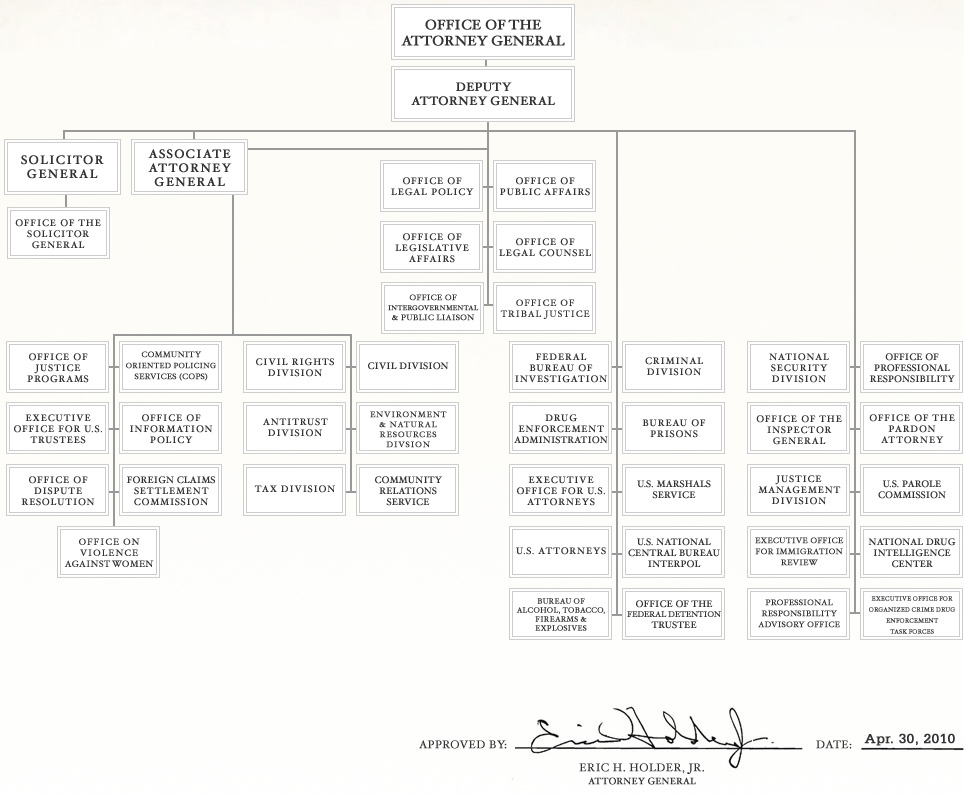
Discerning which of the dozens of agencies in the Department of Justice to send a FOIA request to is tricky. This is why under the current FOIA regulations a requester is allowed to write directly to the Department of Justice FOIA office for documents and a FOIA professional in turn sends the request to the correct component. However, under the proposed regulation “A requester must write directly to the FOIA office of the Department component that maintains those records.”
This is unfair, as it is absurd to expect anyone other than an expert FOIA requester to be able to determine which Department of Justice component to send their request to, especially when the agency itself is oftentimes unclear on which component possesses specific records. Such an exclusive barrier is antithetical to the idea of democratization of information.
New Burdens on Educational Institutions
Another proposed regulation seeks to make it more difficult to be considered an “educational institution,” thereby making FOIA requests more expensive for a large group of requesters.
At present, the Department of Justice defines an educational institution as “a preschool, a public or private elementary or secondary school, an institution of undergraduate higher education, an institution of graduate higher education, an institution of professional education, or an institution of vocational education that operates a program of scholarly research.” However, the altered language would say that to be in this category a requester “must show that the request is authorized by, and is made under the auspices of, a qualifying institution and that the records are not sought for a commercial use, but rather are sought to further scholarly research.” It is baffling that the Department of Justice – which stated that “Unnecessary bureaucratic hurdles have no place in the ‘new era of open Government’” – would limit the definition of educational FOIA requests.
…And the News Media
The Department of Justice is also trying to sell an antiquated notion of what it means to be a news organization. If Justice has their way, it would be more difficult for news agencies to obtain records because to classify as a member of the news media, an organization must “make their products available through a variety of means to the general public.” This would discount, most obviously, media outlets that exist only on the Internet. Organizations like ProPublica – which just received its second Pulitzer Prize in as many years for its reporting on the financial crisis – would not qualify as representatives of the news media.
Preservation of Records
The Department of Justice’s regulations also include a provision to allow the destruction of records. While the law currently states that “Records will not be disposed of while they are the subject of a pending request, appeal, or lawsuit under the FOIA,” the Department of Justice wants to change the wording of this regulation to “Records that are identified as responsive to a request will not be disposed of or destroyed while they are the subject of a pending request, appeal, or lawsuit under the FOIA.” This narrows the scope of an agency’s obligation to preserve records and grants it the authority to destroy records that are the subject of a pending request but not “identified as responsive to a request,” which only the agency would be responsible for determining. This proposal runs counter to the intent of the FOIA and would allow agencies to place records that may have been improperly withheld beyond judicial review.
Finally – new regulations or not – we must make sure that the Department of Justice does not continue to lie to FOIA requesters. According to the Department of Justice’s Office of Information Policy Director Melanie Pustay, this type of behavior “has been implemented the same way for the 25 years it has been in existence.” This may mean that the Department of Justice has been lying to requesters for almost three decades, and was simply trying to institutionalize the common practice into law, after a federal judge condemned the Department of Justice for lying to him and stating that DOJ’s “Deception prevents justice.”
The fight is not over. Right to Information advocates must continue to keep a close watch on the the Department of Justice –and in particular the Office of Information Policy. The Senate Judiciary Committee and the House Committee on Oversight and Government Reform must use their power of oversight to force the Department of Justice to remain accountable to US citizens. The Department of Justice has certainly not been acting like it is in a new era of open government. Finally, President Obama must realize that his own Department of Justice is stymieing his promises of transparency. He must force it to change –if he still believes in what he said on his first day in office.
Updated November 14
National Security Counselors has also submitted comments on the Department of Justice’s proposed regulation changes. NSC points out that the sections regarding responses to requests and payment of fees would contradict FOIA case law requirements. Specifically, Section 16.6(d)(3) would only require the agency to provide FOIA requesters with an “estimate” of the volume of records being withheld. This is insufficient. FOIA case law necessitates that an agency withholding one or more documents in their entirety must include, at a minimum, a list of the withheld documents in their denial letter, not just an estimate.
Additionally, Section 16.10(e) would commit requesters to paying “the actual or estimated total fee” for a search or face the closure of their request. This is likewise inexplicable, as “all non-commercial requesters are entitled to two free hours of search and 100 free pages of duplications, period.” In other words, the agency must perform up to two hours of search even if the requester refuses to pay any fees. The comments NSC present continue to highlight the flaws in the Department of Justice’s proposed FOIA changes – hopefully Eric Holder will continue to listen.

 UNREDACTED: The National Security Archive Blog
9 responses to “The Department of Justice’s Quest to Weaken FOIA Still Going Strong”
‘A requester must write directly to the FOIA office of the Department component that maintains those records.””
If this manages to survive, expect the DOD to follow along. I suspect other agencies will become “distributed” as well in order to dodge doing their jobs re FOIA
Organizations like ProPublica – which just received its second Pulitzer Prize in as many years for its reporting on the financial crisis – would not qualify as a representatives as the news media.
Organizations like ProPublica – which just received its second Pulitzer Prize in as many years for its reporting on the financial crisis – would not qualify as a representatives as the news media.
what is the matter in america? in the american government? what really is it? guilt leading to a death wish?
whatever it is, it is something deep, and deeply self-destructive.
[…] 14, 2011 (National Security Archive) – As we recently reported, the Department of Justice was considering amending its FOIA […]
[…] to the Supreme Court that FOIA should become a withholding, rather than a disclosure, statute; has proposed regulations that allow lying to FOIA requsters (its probably still doing this despite the regs having been […]
[…] for documents, or finding some other administrative reason. (The DOJ recently attempted to change its FOIA regulations so that requests had to be made to the specific DOJ component –often very hard […]
[…] 2011, the back-to-back Rosemary Award-winning Department of Justice proposed FOIA regulations that would have — among many other FOIA setbacks — allowed the Department to lie to FOIA […]
[…] 2011, the back-to-back Rosemary Award-winning Department of Justice proposed FOIA regulations that would have — among many other FOIA setbacks — allowed the Department to lie to FOIA […]