
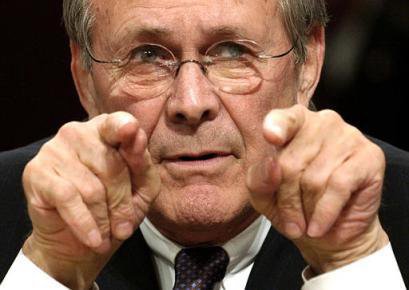
Former Secretary of Defense Donald Rumsfeld created a bit of a stir when he announced that he was supplementing his book, Known and Unknown with “a portion of my [sic] Archive…available in digital form on my web site, www.rumsfeld.com, which accompanies and supports this memoir.” But exactly how he got these previously classified documents released remained a bit of a mystery. Until now.
After wikileaks released classified Department of State cables, Rumsfeld took to twitter to proclaim, “I was a co-sponsor of FOIA in 1966. There is an appropriate, lawful process for declassifying material. It’s not #Wikileaks…With my book I will release 100s of supporting docs on a website – many previously classified, but unlike #wikileaks, all cleared by USG.” But newly declassified documents, released in response to a National Security Archive FOIA request show that Rumsfeld did not use FOIA to win the release of the vast bulk of these documents. He used a provision of the President’s Executive Order on Classification that allows presidential appointees to request declassification of the documents they created during the tenure.
Many of the documents that Rumsfeld got declassified had been requested by the National Security Archive years earlier; when they were released to Rumsfeld, we were still languishing in the queue.
A “lawful process?” Sure. An “appropriate” process? Maybe. Good that the documents are declassified? Yes. A fair process? Certainly doesn’t feel that way if you are a frequent document requester who has had your request superseded so that a retired Secretary of Defense can pump-up his memoir sales and present his perception of history.
At any rate, here are some of the highlights from the 286 pages of correspondence between Rumsfeld, his researchers, and the Department of Defense Records and Declassification division:
- Rumsfeld appears to have begun requesting the declassification of documents in March 2007, three months after he resigned as SecDef. The earliest correspondence is almost identical –in appearance and bossiness— to the Secretary’s infamous“snowflakes.”
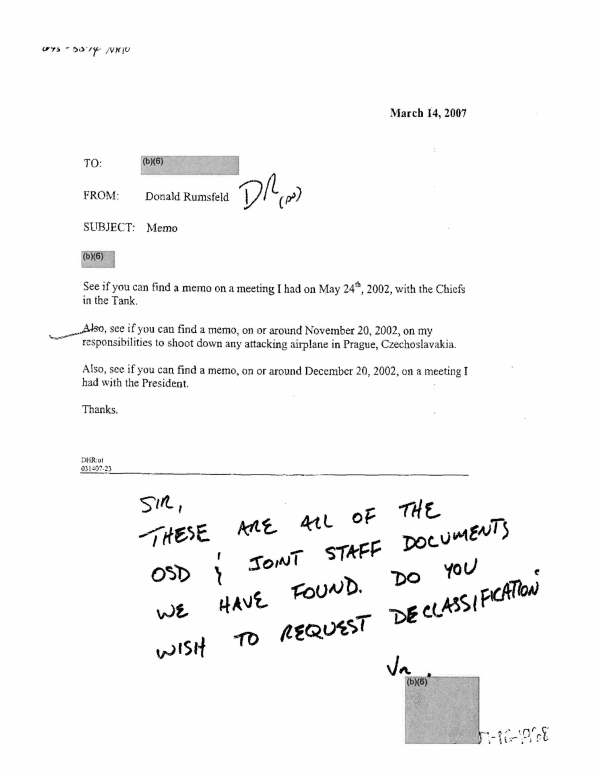
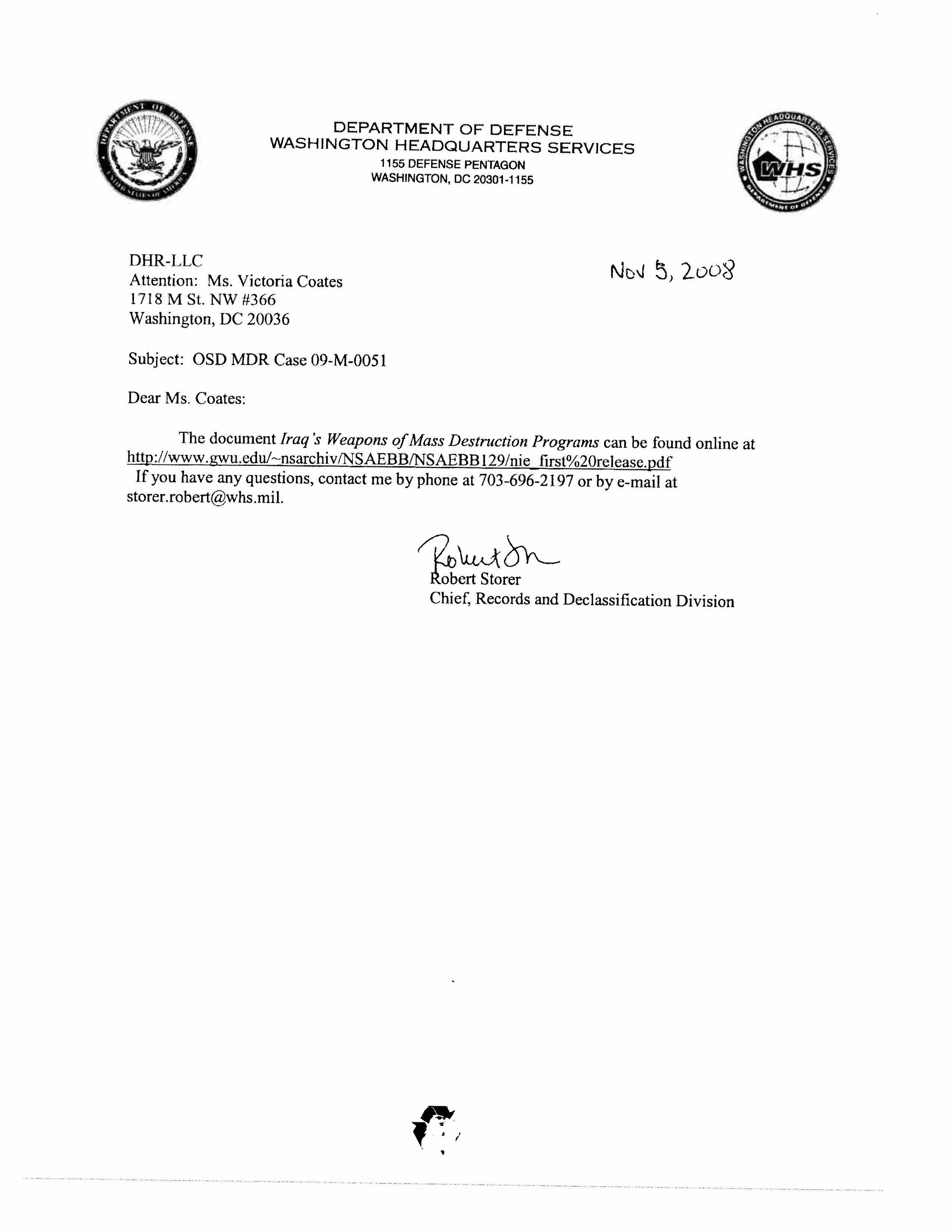
Do the flakes never stop falling? - Almost all of Rumsfeld’s correspondence with the DOD declassifies was conducted by a company named DHR-LLC whose mailing address was on M St. in Washington, DC. Almost all of the legwork in getting the documents released to DHR-LLC was conducted by the DHR-LLC employees Victoria G. Coates and Keith Urbahn. Coates –who’s background is in art history– is now in charge of Governor Rick Perry’s national security portfolio and frequently blogs on redstate.com (formerly under the handle “AcademicElephant”). The New York Times credits Keith Urbahn’s 10:52 PM tweet-leak (probably from his boss Rumsfeld) with “confirming” that Osama bin Laden had indeed been killed.
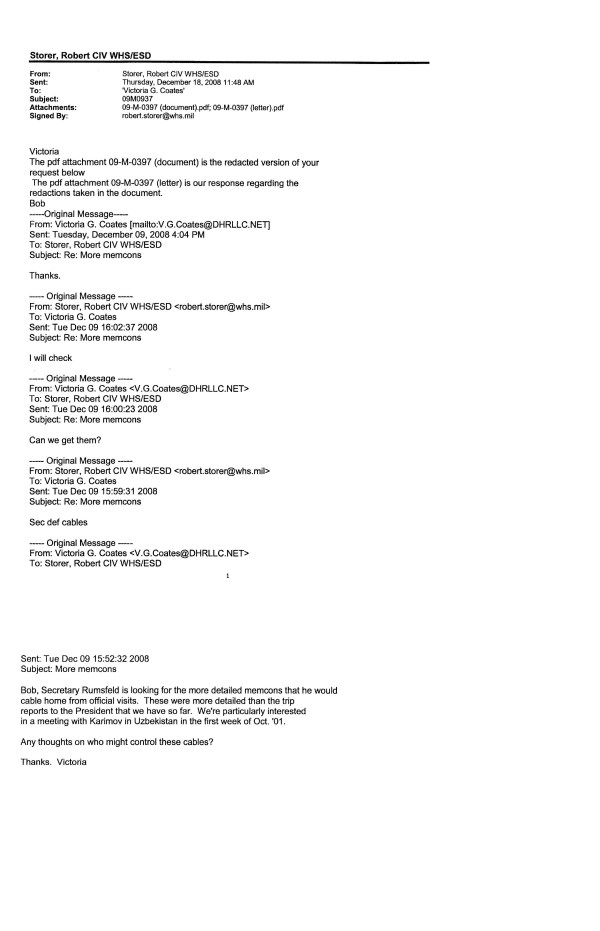
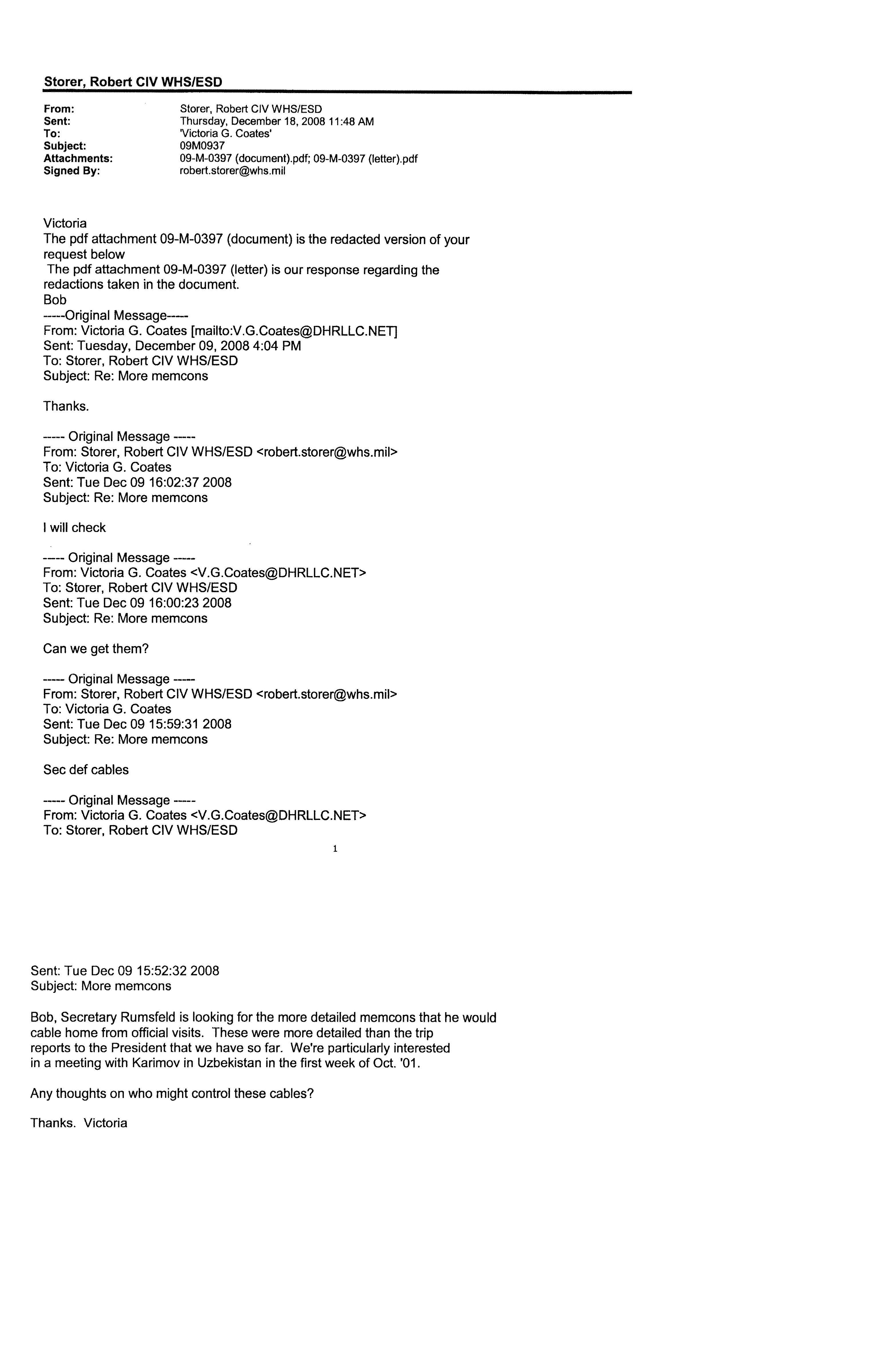
- The DOD Records and Declassification Division has a strong reputation for good customer service toward requesters. The Division appears to have bent over backwards to accommodate Rumsfeld’s researchers. In one exchange, Coates sent an informal email inquiring about documents detailing an October 2001 meeting between Rumsfeld and the President of Uzbekistan, Islam Karimov. It would probably take a normal requester more than a year to receive a response for a request like this–and I’d bet that the record would likely be denied. Within seven minutes, a DOD official wrote back stating that the documents could be found in the Sec Def cables. Fifty-two seconds later, Coates shot back: “Can we get them?” Nine days later she received an email with a version of the documents.
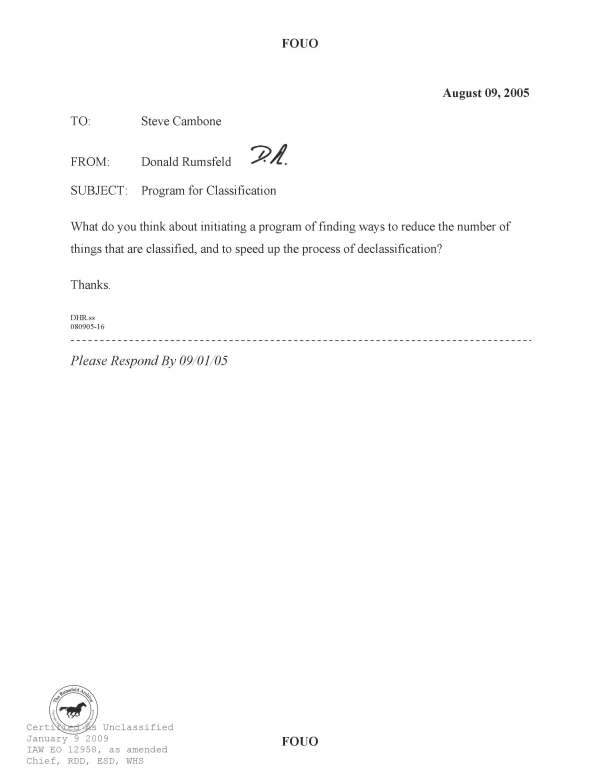
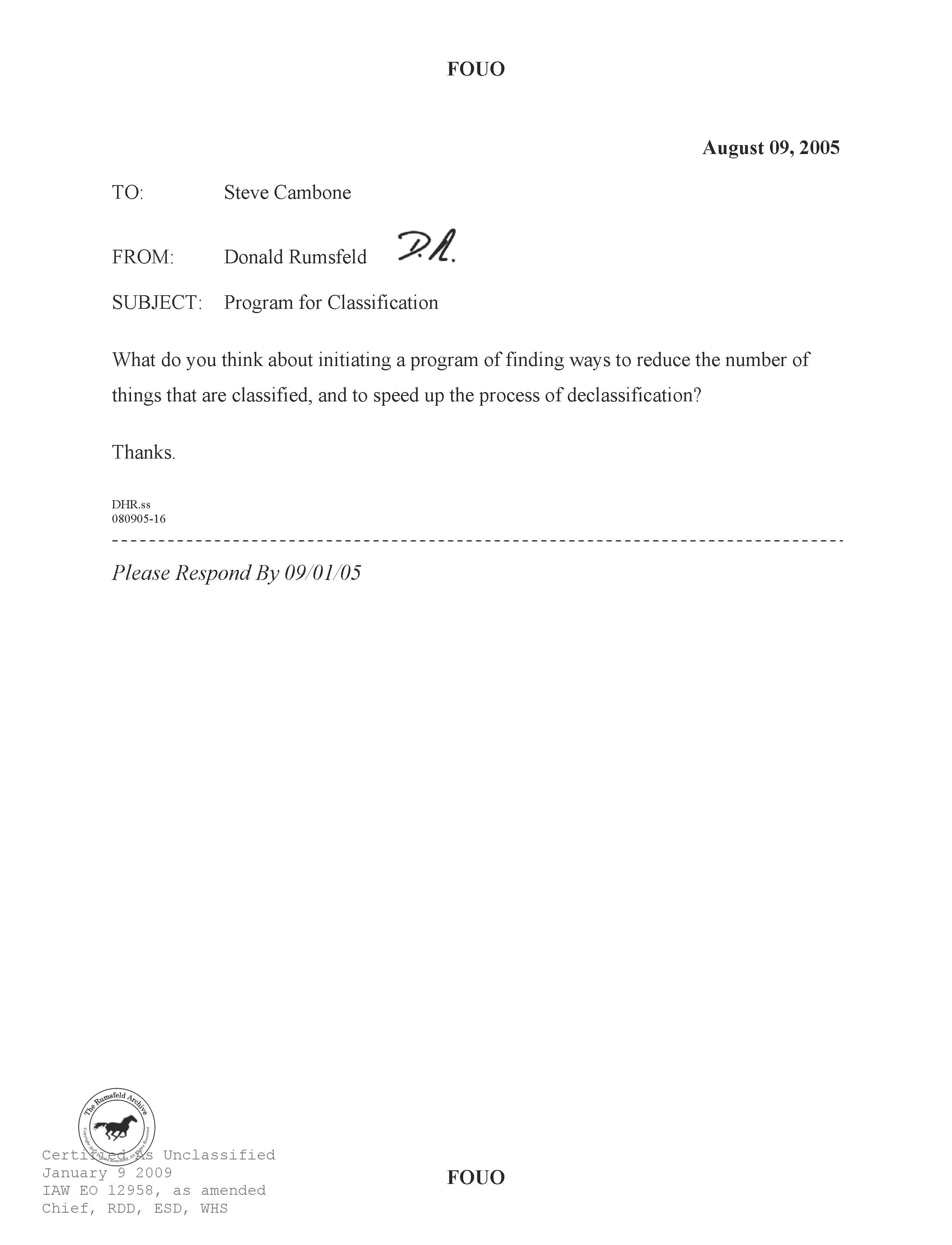
Start reading from the bottom. - Another email showed that Rumsfeld and his staff were not immune to the key problem hindering effective declassification: the referral system. One February 2010 email showed that seventy-nine of his requests (forty-two percent) had to be referred to other agencies. Mr. Urbahn asked if there were any time frame estimates on the referrals. DOD replied it would, “keep pushing.” I’ve learned that this usually means, “don’t get your hopes up.” To his credit, Rumsfeld wrote a snowflake in August 2005 asking, “What do you think about initiating a program of finding ways to reduce the number of things that are classified, and to speed up the process of declassification?” A cynic might say he was already thinking about his book deal.
Any response? - One huge advantage Rumsfeld’s team had that “normal” requesters don’t is a knowledge of what documents existed. It’s much easier to get a document declassified when you can refer to its title (which “outsiders” can rarely do). To that end, the DOD’s release of Rumsfeld’s correspondence is a boon to Freedom of Information Advocates. It includes an index of all of the documents Rumsfeld requested— including many that are not on Rumsfeld’s website.
- Hopefully Donald Rumsfeld is now familiar with the National Security Archive. In at least one case, DOD referred Mr. Rumsfeld to our website to obtain a document.
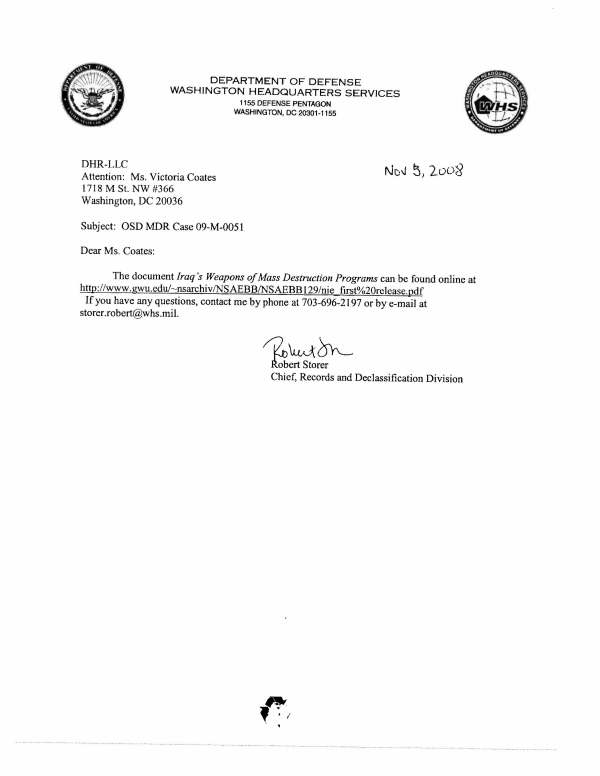
He hasn’t “liked” us on facebook yet.
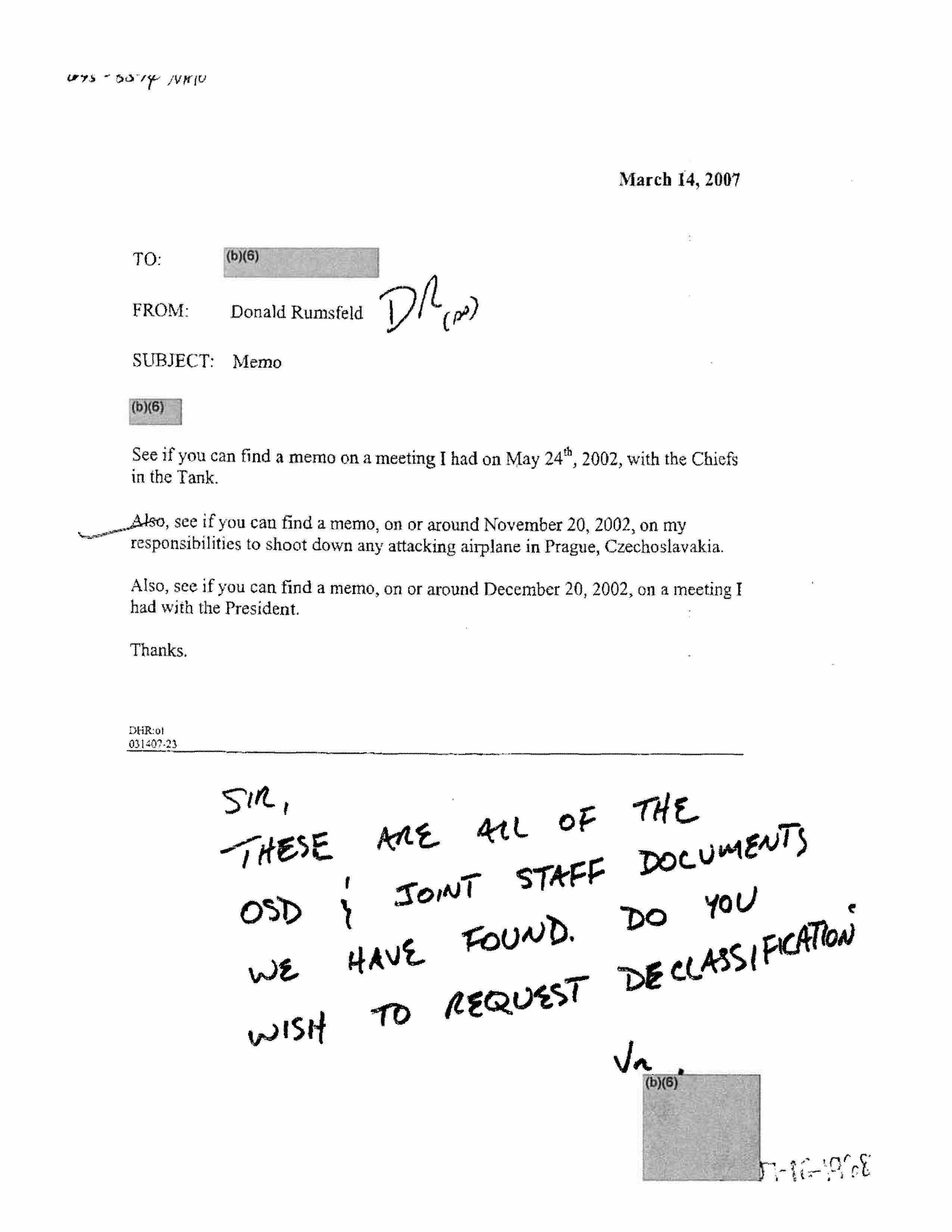

 UNREDACTED: The National Security Archive Blog
3 responses to “Document Friday: How Donald Rumsfeld Cut the Queue to get DOD Documents Declassified.”
[…] course, high level officials like Douglas Feith and Donald Rumsfeld get to cut the line and get their documents declassified so they can include them in their autobiographies –and […]
this is great – excellent writing and reporting.
[…] information in the custody of the Secretary of Defense and the OSD components. The rules that are currently on the books allowed Secretary of Defense Donald Rumsfeld to used a provision of the President’s Executive […]