
Peter Galbraith, a former U.S. ambassador to Croatia, wrote an interesting piece for Foreign Policy regarding the keys to writing a State Department cable that a policymaker will actually read. His keys provide good context for understanding some of the more colorful leaked cables discussed in the news and the minute anecdotal details that are commonly included.
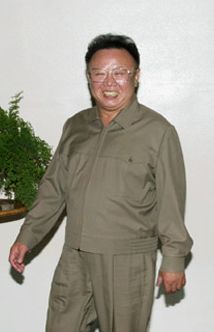
South Korea has declassified an additional 180,000 pages of diplomatic documents as part of its normal annual declassification procedure. The documents describe 1970s and 80s-era suspicions regarding North Korean nuclear activity, an early assessment of Kim Jong-il’s personality predispositions, and documentation regarding South Korean attempts to prevent allies from pursuing closer diplomatic relations with North Korea.
Russell Carollo of Junketsleuth has a detailed rundown of his difficulty in getting the FDIC to comply with multiple FOIA requests for employee travel records, which are generally considered public and have been readily supplied upon request by other federal agencies. Felix Salmon of Reuters suggests that the FDIC’s failure to respond is indicative of “the culture of secrecy and of we-know-best [attitude] that pervades the financial sector.”
John Cook at Gawker has posted a collection of documents that Donald Rumsfeld neglected to include in his archival Rumsfeld Papers website that accompanied the publication of his recent memoir. Cook and company obtained the documents by sending a FOIA request to the Defense Department for all the records that Rumsfeld had requested and previously obtained from DOD via FOIA. The result was many documents that did not make their way into Rumsfeld’s online collection. The documents (available in their entirety here) portray Rumsfeld “curious to know what the rush is” in bringing enemy combatant and U.S. Citizen John Walker Lindh to a speedy trial, interested in rationalizing why administration policies toward detainees was “perfectly legal, proper, and historically correct,” and emphasizing that administration officials continued “referring to our ‘plan’.”
Secrecy News has a look at the Defense Department’s internal information security regulations in the aftermath of President Obama’s Executive Order 13526, and claims that the DOD has “failed to update its internal regulation on information security, despite a specific Presidential directive to do so.”
Johnny Dwyer, relying on more than 3,000 pages of declassified State Department cables obtained via FOIA request, wrote a good piece for Foreign Policy summarizing DOS efforts to effectively undermine the regime of former Liberian President Charles Taylor, who is currently awaiting judgment in a war crimes trial at the Hague.

 UNREDACTED: The National Security Archive Blog
One response to “FRINFORMSUM: 2/24/2011”
[…] This post was mentioned on Twitter by NatlSecurityArchive, MS. MS said: FRINFORMSUM: 2/24/2011 « UNREDACTED http://bit.ly/frKRGd — FREEDOM […]