
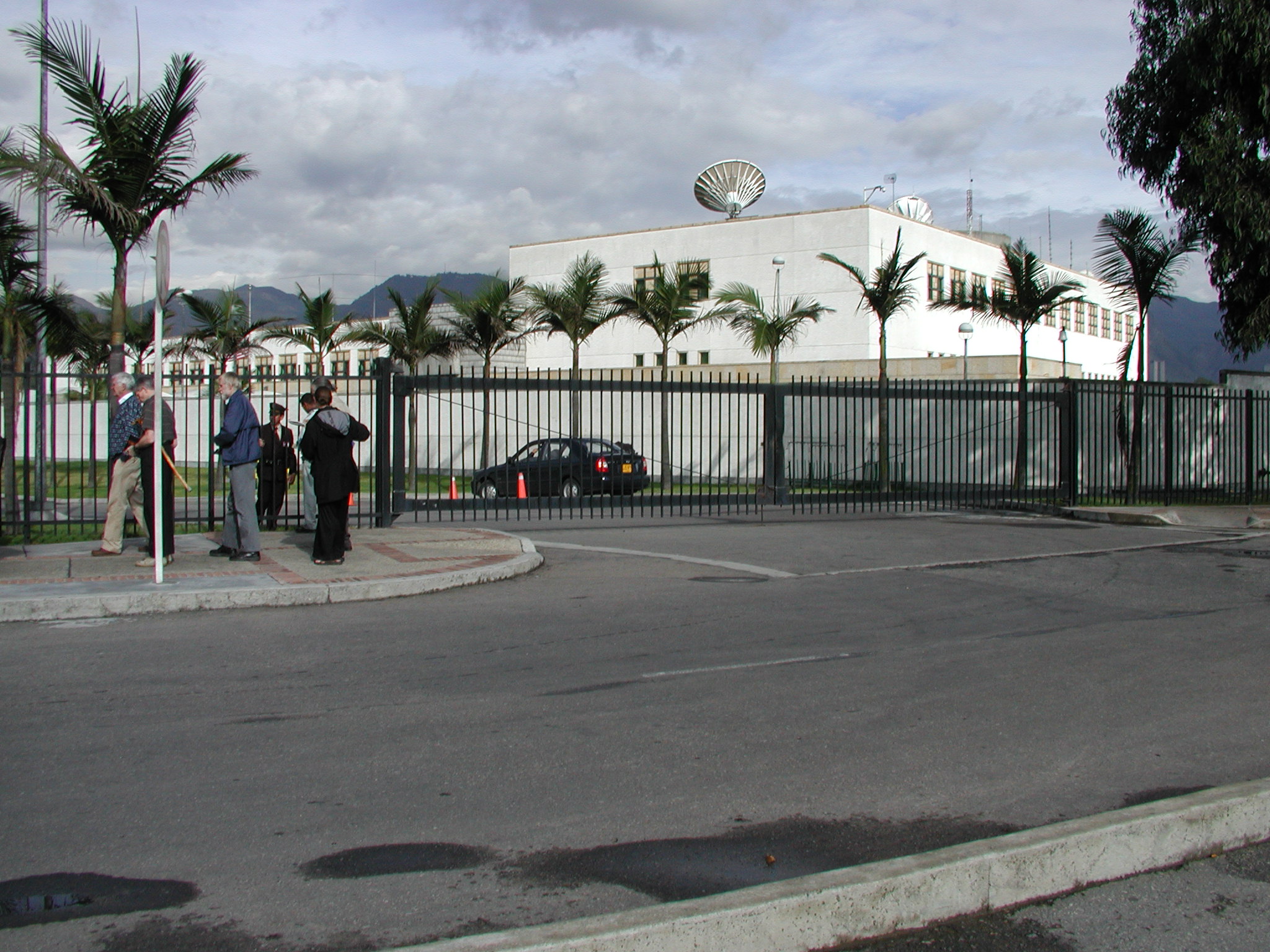
The first trickle of Wikileaks cables from the U.S. Embassy in Colombia appeared on the Internet late last night. While this represents only a tiny fraction of the 2,416 cables from Colombia reportedly obtained by Wikileaks, the revelations so far are pretty interesting.
A quick review:
- By far the most interesting revelations come from former Colombian Army Inspector General Maj. Gen. Carlos Suarez, the man put in charge of investigating the “false positives” scandal—which revealed an epidemic of extrajudicial killings of innocent civilians by the Army to inflate the guerrilla body count. In a February 2009 meeting, Suarez told an Embassy official that the “phenomenon originated in the 4th Brigade in Medellín,” a unit once led by “former Army Commander Mario Montoya and current Army Commander Oscar Gonzalez.”
- Suarez said the “insistence by some military commanders on body counts as a measure of success despite [Ministry of Defense] directives to the contrary—coupled with some commanders’ ties to criminals and narcotraffickers—led to the specific pattern of murders” in the “false positives” cases.
- Army Commander Gonzalez “opposes his work” according to Suarez, and had “tried to intimidate witnesses not to testify about murders committed by the 11th Brigade in Sucre.”
- Suarez added that “retired generals such as Montoya and former 17th Brigade Commander Rito Alejo del Rio”–who is currently on trial for fomenting illegal paramilitary groups–“are working with right-wing politicians like former Minister Fernando Londono to undercut [Defense Minister Juan Manuel] Santos’ human rights initiatives.”
- Despite the severity of the “false positives” scandal, President Álvaro Uribe “continues to view military success in terms of kills,” according to Suarez, “leaving him susceptible to the arguments of some military officers and politicians that the [Ministry of Defense’s] emphasis on human rights is overstated and is harming the war effort against the FARC.” Vice Minister of Defense Sergio Jaramillo “confirmed that the group’s arguments are gaining some traction with Uribe.”
- In an August 2005 meeting with U.S. officials, Defense Minister Ospina “quipped” that he considered himself to be “Rumsfeld’s deputy in Colombia” … “coordinating his third front of the war on terrorism.”
- At the same 2005 meeting, Uribe calls Chavez “a mix of someone with imperial sentiments and drunk with socialism.”
- At the same meeting, the U.S. sought assurances from Colombia that demobilized paramilitary leaders would not be immune from extradition under the Justice and Peace demobilization plan. Many of the top paramilitary leaders were, in fact, extradited to the U.S., effectively ending their “voluntary confessions” and jeopardizing future reparations to victims of paramilitary violence.
- It’s really no surprise to learn that the U.S. has been providing the Colombian military with intelligence on Venezuela and Ecuador. In an August 14, 2008, meeting, Armed Forces commander Freddy Padilla asked for “continued intelligence exchange on Venezuela, and also sought any additional intelligence the USG could provide on Ecuador.”
- Padilla told the U.S. that Colombia’s 2008 military strike on a FARC camp in Ecuador and subsequent saber-rattling had shown that the “Venezuelan Armed Forces were considerably weaker than they had believed.” At the same time, “the Ecuadorian military showed it was a much more professional, if smaller, force than its Venezuelan counterparts.”
- In a September 2009 meeting with Vice President Francisco Santos, U.S. Ambassador William Brownfield “made clear that the USG was close to severing all relations with the DAS” after revelations that the spy agency had conducted a massive, illegal wiretapping program aimed at journalists, judges, human rights activists, and members of the political opposition. The U.S. was especially concerned to learn that its own communications with a judge had been tapped. Santos told Brownfield that Uribe “did not fully understand the depth of the crisis.”

 UNREDACTED: The National Security Archive Blog
9 responses to “Wikileaks on Colombia: Uribe “views military success in terms of kills”; Army Commander Gonzalez “tried to initimidate witnesses” to Extrajudicial Executions”
It sickens me a little to say this – but perhaps against a fading rebel army FARC in Columbia or the Tamil Tigers in Sri Lanka – maybe large degrees of force are simply effective
Violence against violence creates more violence and that is the next chapter for Colombia.
Uribe is a war criminal, he used genocide against his own people in the name of getting rid off the FARC. The crimes committed by his government are slowly coming out to light. It is shameful that this guy was the closest ally to the US in Latino America and the American involvement in this crime will also come to light.
[…] […]
[…] Wikileaks on Colombia: Uribe ‘views military success in terms of kills’; Army Commander … […]
[…] month we highlighted key details from the first round of Wikileaks-related disclosures on Colombia, including the revelation that […]
[…] on his case was discussed at the highest government levels and has been corroborated by the recent revelations of US State Department cables by WikiLeaks, according to Cortes. “If it […]
[…] December 9, 2010 UNREDACTED: Wikileaks on Colombia: Uribe “views military success in terms of kills” […]
[…] other dirt on Uribe: former Colombian Army Inspector General Maj. Gen. Carlos Suarez reported that President Álvaro Uribe "continues to view military success in terms of kills"… Edit: I almost forgot to mention President Uribe’s alleged ties to right-wing death […]
[…] in causal research is, of course, by military division. A false positive is no rogue kill: the state is involved from the time the body is first inspected by the military. Massive amounts of ritualized […]